Why You Can't Start Cleaning (and 9 Ways to Start Anyway)
This post has affiliate links. As an Amazon Associate I earn from qualifying purchases — it costs you nothing extra.
You know the dishes need doing. You want them done. You're not busy. And yet here you are, on the couch, staring at the kitchen like it's a mountain you'd need oxygen tanks to climb.
That's not you being bad at life. For a lot of people with ADHD, starting a task is the hardest part, way harder than doing it. Your brain wants the task done, but the "go" signal doesn't fire.
The good news: you can work around it. Here are nine small tricks that make starting easier. Try one today.
Why starting is so hard
Boring tasks don't give our brains much reward, so there's not much fuel to get going. Add overwhelm ("the whole kitchen is a disaster"), uncertainty ("where do I even begin?") and a little dread, and the start button feels jammed.
The trick is to make the start smaller, more interesting or more urgent. Every idea below does one of those three.
1. Make the first step ridiculous
Not "clean the kitchen." Not even "do the dishes." Make it "put one cup in the dishwasher."
It sounds silly, but a ridiculous first step gets your body moving. And once you're moving, the next step is usually way easier.
2. Stand up first, decide later
Don't decide whether you're going to clean. Stand up. Walk to the kitchen. Put your hand on something.
Your body in the room does half the work. Decisions are easier when you're already standing there.
3. Countdown and launch
Count down from five and move on one. "5, 4, 3, 2, 1, go." It feels a bit like a rocket launch, and that little burst of urgency is sometimes enough to break the stuck feeling.
4. Set a timer for five minutes
Promise yourself you can stop after five minutes. A visual timer works best because you can watch the time shrink.
Knowing there's an end makes the start feel safer. And about half the time, you'll keep going after the timer.
5. Add something fun
Pair the boring task with something you like: a podcast only allowed during chores, a playlist, a phone call, an audiobook. That little bit of fun gives your brain a reason to show up.
The "only during chores" rule is key. It makes the chore the gateway to the good stuff.
6. Get a buddy
Body doubling means having someone around while you work. A friend on the phone, a partner in the same room or a "clean with me" video. Someone else's energy helps yours get started.
7. Pick the most visible win
Start with whatever will make the biggest visual change the fastest. Usually that's trash or clearing one surface.
Seeing a difference right away is motivating. Scrubbing a hidden baseboard, while valuable, is not.
8. Remove the setup
Sometimes we don't start because starting has steps: find the spray, find the cloth, empty the dishwasher before we can load it. Have a stocked cleaning caddy ready, keep a handheld vacuum on the wall, and keep supplies where messes happen. Less setup, easier start.
9. Name the smallest possible 'done'
Before you start, decide what counts as finished. "Done" might be "the sink is empty," not "the kitchen is spotless."
A clear finish line makes starting easier, because your brain can see the whole task at once, beginning to end. Vague tasks feel endless. Small, defined ones feel doable.
And if none of it works today
Some days, the start button won't fire no matter what. That's okay. Rest, eat something, drink water. Try again later or tomorrow.
Being kind to yourself isn't giving up. It's how you get back up.
Helpful finds
Flip cube timer
Flip to 5, 15 or 30 minutes to start. Zero setup means zero excuses.
See it on AmazonPick one trick. Try it on one tiny task. That's a start, and starts count.
If a gentle, step-by-step plan helps you get moving, The Messy Brain Home Reset breaks the whole house into seven small, doable days.
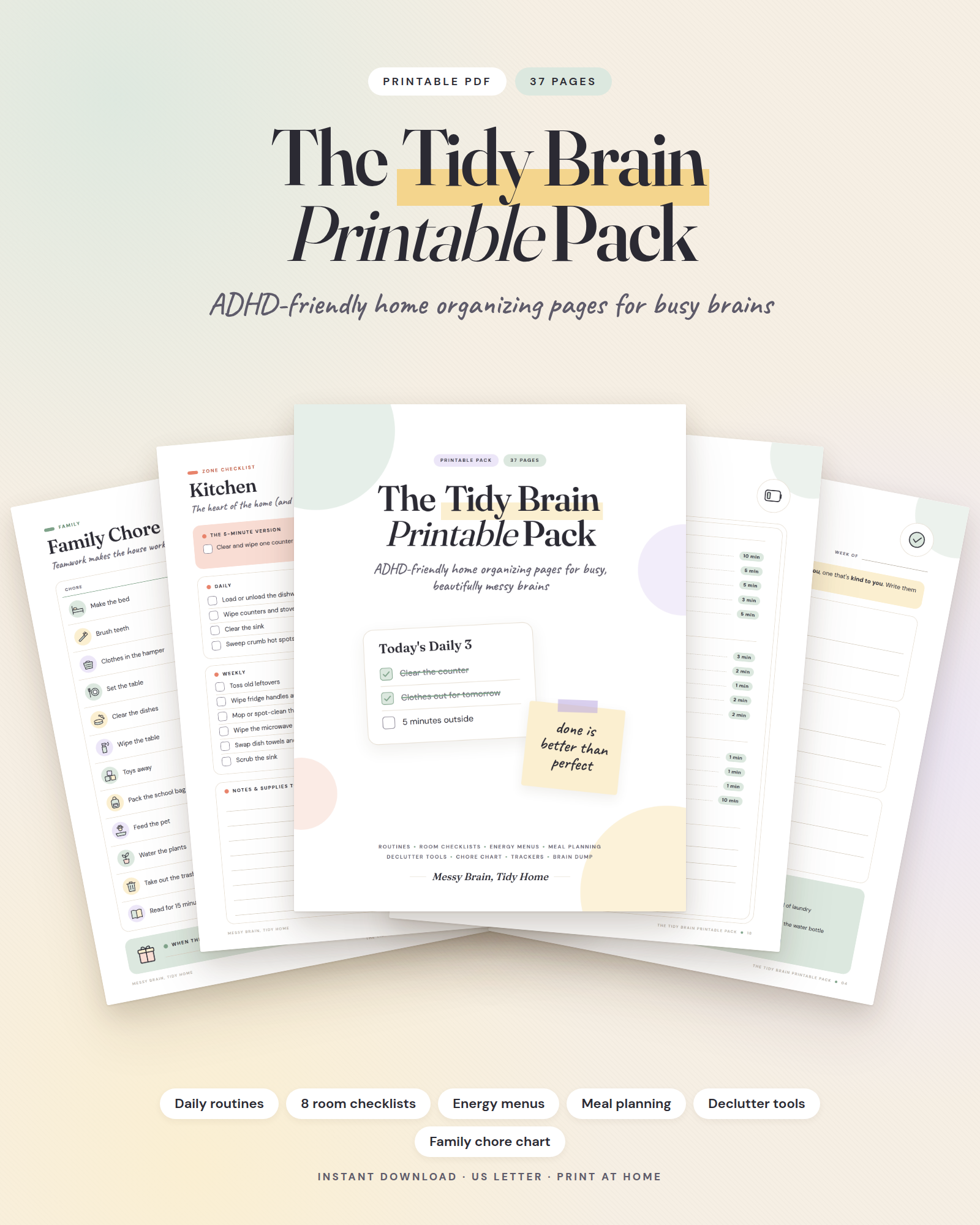
The Tidy Brain Printable Pack
Checklists, trackers and routines made for brains that forget. Print what you need, stick it where you'll see it.
Get the pack · $14