Fridge Organization Ideas So Food Stops Going Bad in the Back
This post has affiliate links. As an Amazon Associate I earn from qualifying purchases — it costs you nothing extra.
We've all done it. You open a container in the back of the fridge, and it's... alive. You don't remember buying it. You don't remember cooking it. It has become a science experiment.
For our brains, the fridge is a perfect storm. Food goes in, goes behind other food and stops existing. Then we buy more because we can't see what we have, and the cycle repeats.
A few simple changes fix most of it. Here's how to set up a fridge that shows you what you've got.
The principle: visible and front
Everything in the fridge should either be visible from the front or in a clear bin you can slide out. If you have to move three things to see a fourth, the fourth is going to spoil.
That's it. That's the whole philosophy. Everything else is how to make it happen.
Step 1: Quick clean-out (15 minutes)
Do this right before a grocery trip, when the fridge is at its emptiest.
- Toss anything expired, moldy or mysterious.
- Combine duplicates (three open jars of the same salsa, anyone?).
- Wipe the shelves with a damp cloth.
Don't aim for spotless. A quick wipe is enough.
Step 2: Set up simple zones
- Top shelf: ready-to-eat stuff like leftovers, yogurt and snacks.
- Middle shelf: dairy, eggs and drinks.
- Bottom shelf: raw meat, in a bin, so it can't drip on anything.
- Drawers: produce.
- Door: condiments.
Use clear bins to hold each group. Bins make the fridge work like drawers, which is way easier for our brains than stacks.
Step 3: Make an 'eat first' bin
This is the single most useful trick. One clear bin, labeled EAT FIRST, right at eye level. Anything that needs eating soon goes in it: leftovers, half an onion, the berries that are about to turn.
When anyone's hungry, they check the bin first. Less waste, and you stop finding week-old lasagna in the back.
Step 4: Keep produce where you'll see it
Crisper drawers are where good intentions go to die. If you keep forgetting vegetables, try moving them to a clear produce container on a middle shelf. When you see them, you use them.
Wash and chop a few things after grocery shopping if you have the energy. If not, buy pre-cut. That's not cheating. That's a system that works with your life.
Step 5: Label the shelves
A label on the shelf or bin ("SNACKS", "DAIRY", "EAT FIRST") means everyone in the house knows where things go when they put groceries away. It keeps the system working even when you're not the one unpacking.
The weekly 2-minute check
Before you write your grocery list, open the fridge and look at the eat-first bin and each zone. What needs eating? What's running low? This two-minute check saves money and makes the list faster, too.
The finds
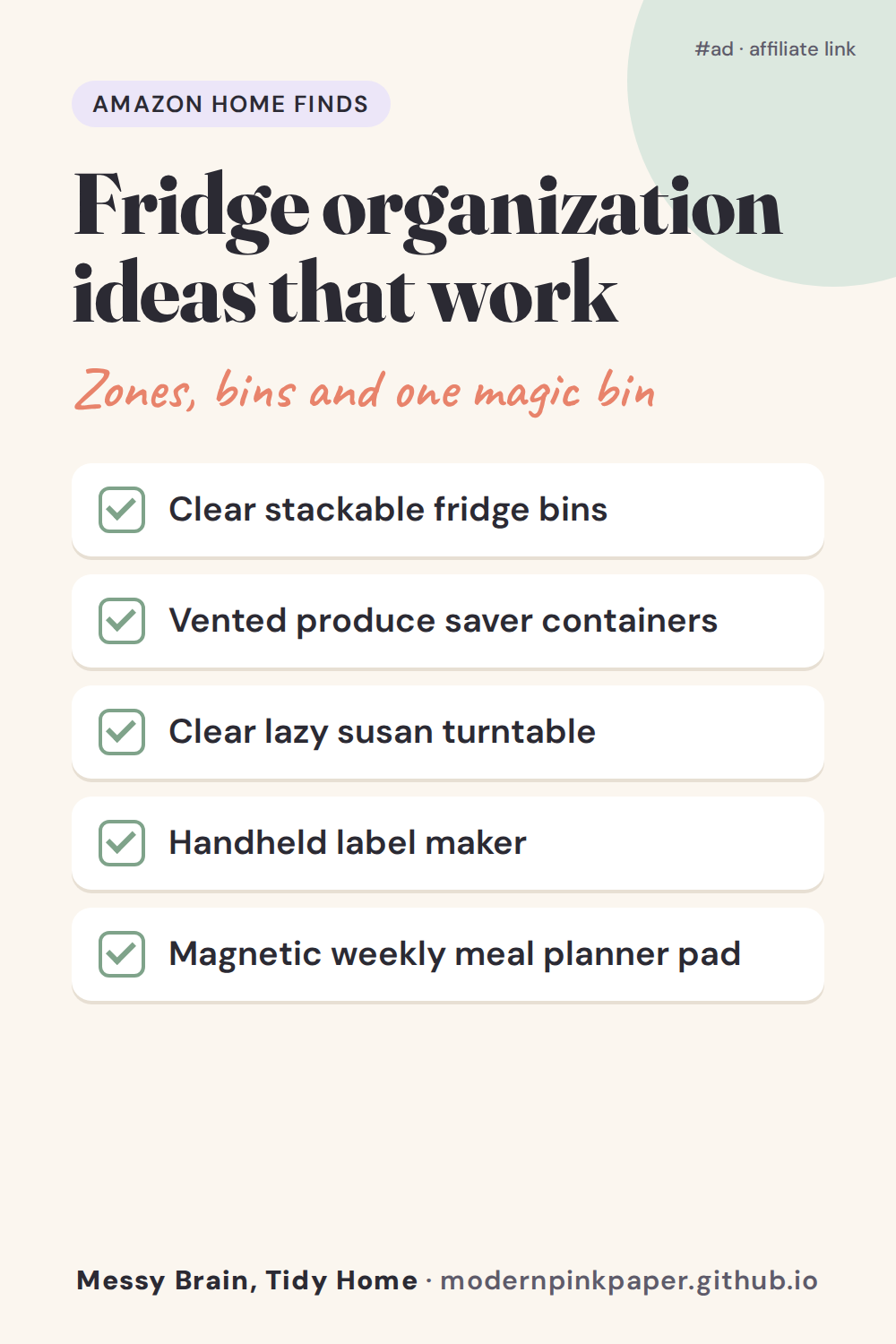
Clear stackable fridge bins
Clear bins keep food in sight so it gets eaten, not forgotten behind the pickles.
See it on AmazonVented produce saver containers
Produce sits visible and front-and-center, so you use it before it turns into a science project.
See it on AmazonClear lazy susan turntable
Put one on a fridge shelf for jars and sauces. A spin shows you everything, even in the back corner.
See it on AmazonHandheld label maker
Labels do the remembering, so everyone in the house knows where things go.
See it on AmazonMagnetic weekly meal planner pad
Plan the week on the fridge and tear off the grocery list. One page, two jobs done.
See it on AmazonDry-erase monthly fridge calendar
On the fridge, the whole month is right where you look every day.
See it on AmazonMagnetic digital kitchen timer
A timer that lives on the fridge gets used, and it's loud enough to hear from the couch.
See it on AmazonStart with an eat-first bin. It's one bin and it changes everything.
For printable fridge labels, a grocery list and a weekly meal plan page, check out the Tidy Brain Printable Pack.
The Messy Brain Home Reset
The shame-free 7-day system to get your home under control — and a restart plan for when life happens.
Get the ebook · $9.99