The Paper Clutter System for People Who Hate Filing
This post has affiliate links. As an Amazon Associate I earn from qualifying purchases — it costs you nothing extra.
Paper is the sneakiest clutter there is. It arrives every single day, it's flat so it stacks invisibly, and every piece needs a tiny decision. Bill? Junk? Permission slip due tomorrow? Coupon you'll never use?
For our brains, that means paper piles up on every flat surface until something important gets lost in there. (Ask us about the parking ticket.)
Here's a paper system built for people who will never, ever enjoy filing.
The system: 3 decisions, not 30
Every piece of paper that comes into your home gets one of three decisions, the moment you touch it:
- Toss it (recycling or shred).
- Act on it (it needs you to do something: pay, sign, call, RSVP).
- Keep it (you need it for records, but it doesn't need action).
That's the whole system. No 20-category filing cabinet.
Step 1: Open mail at the recycling bin
Put a slim recycling bin exactly where mail enters the house, next to the launch pad or kitchen counter. Open mail standing there. Most of it is junk, and junk goes straight in the bin.
If you have a shredder, put it right there too. Sensitive junk goes in the shredder immediately, not in a "to shred" pile that lives forever.
Step 2: One ACT spot everyone can see
Anything that needs action goes in one visible place: a wall pocket, a clipboard or a fridge file pocket. Not a drawer. A drawer is where action items go to die.
Bills can go in a bill organizer with a pocket for each week, so you see what's due next without digging.
Step 3: A simple KEEP box
For papers you need to keep, use one file box with hanging folders and only a handful of broad categories:
- Home (lease or mortgage, utilities)
- Money (taxes, bank)
- Medical and insurance
- Car
- Kids (one folder each)
- Manuals and warranties (or a binder with sheet protectors)
Broad categories mean fewer decisions. You're not trying to find it in two seconds. You're trying to find it at all.
Step 4: Weekly 10-minute paper session
Pick a day. Friday afternoon works for a lot of people. Set a timer for ten minutes:
- Go through the ACT spot. Do the quick ones, calendar the rest.
- Drop anything done into KEEP or recycling.
- Check the bill organizer for next week.
Pair it with something nice, like a coffee or a favorite show. Paper is boring. Bribe yourself.
Kids' school papers
School papers are their own beast. Give each kid a clipboard on the wall. Forms that need signing get clipped on top. Art gets displayed for a week, then photographed and recycled, or saved in one "best of the year" folder.
Keeping every drawing isn't love. Keeping the best ones and enjoying them is.
The finds
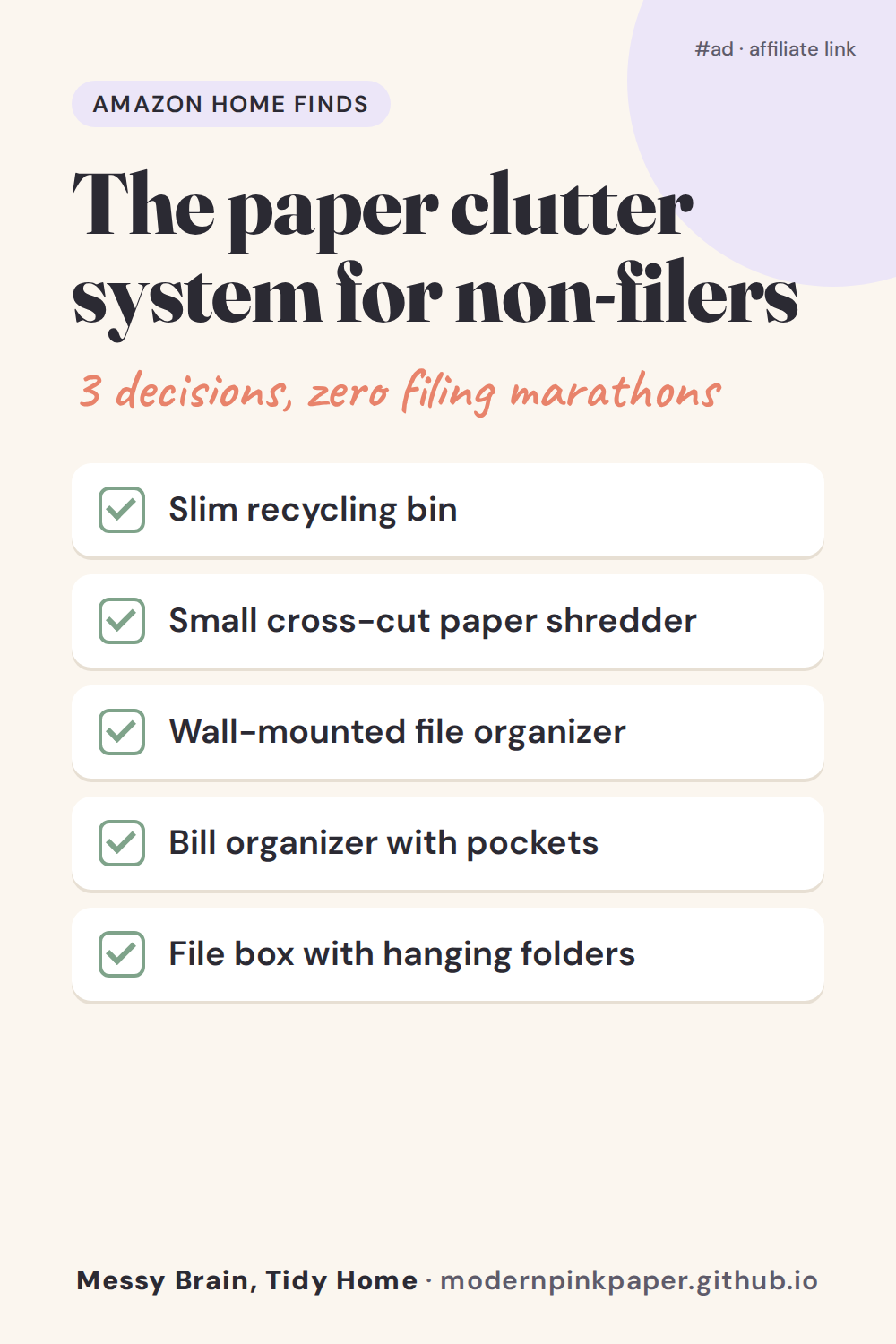
Small cross-cut paper shredder
Shred sensitive junk mail right away instead of saving it for "later."
See it on AmazonWall-mounted file organizer
Paper goes up on the wall in sorted pockets, not down on every flat surface.
See it on AmazonBill organizer with pockets
Bills go in the pocket for the week they're due, so nothing hides until it's late.
See it on AmazonFile box with hanging folders
A lidded box with hanging folders is simple enough to keep up with, and it moves with you.
See it on AmazonWall clipboard set
Clip each kid's forms or each week's bills on the wall. Visible means handled.
See it on AmazonBinder with sheet protectors
Slip manuals and warranties into sleeves. One binder instead of one junk drawer.
See it on AmazonToss, act or keep. Three decisions, one bin by the door and ten minutes a week.
Our ebook The Messy Brain Home Reset has a dedicated paper day with a printable version of this whole flow if you want some guided help.
The Messy Brain Home Reset
The shame-free 7-day system to get your home under control — and a restart plan for when life happens.
Get the ebook · $9.99